Navigating Multi-Level Geometry in San Diego Luxury Architecture

Project Spotlight: Luxury Residence in San Diego, California

The Challenge: Split-Levels and Topographic Integration
Southern California architecture often plays with the landscape, utilizing hillside lots and split-level designs to maximize views. The Luxury Residence Project in San Diego is a massive 8,484 sq. ft. example of this complexity. For architect Diane Zoura of Senses & Spaces, the challenge was capturing the interaction between the house’s interior levels and the surrounding retaining walls, terraces, and grading transitions.
In a home of this scale, the verticality is as important as the horizontal layout. Traditional 2D blueprints often fail to represent how different levels "stack" or how stairwell clearances interact with structural joists. Without accurate 3D data, architects are often forced to "solve the puzzle" on-site during construction—a process that leads to expensive change orders.
The ADS Approach: Precision LiDAR for Split-Level Coordination
From March 17th to March 21st, 2025, ADS (A DCMS Network Company) executed a full-scale 3D scanning service operation. By utilizing LiDAR, we captured the property’s interior and exterior in a unified coordinate system.
Our technicians focused specifically on the "transition zones"—where the interior floor slabs met the exterior terrain. This required adjusting scan densities to account for topographic accuracy, ensuring that the final model reflected the true elevation changes of the site.
Deliverables: Design-Ready Documentation
We provided a comprehensive documentation package tailored for high-end residential design:
Architectural & Structural Revit Modeling: Using an LOD 300 workflow, we captured material layers and structural components, providing a model that was ready for immediate design intervention.
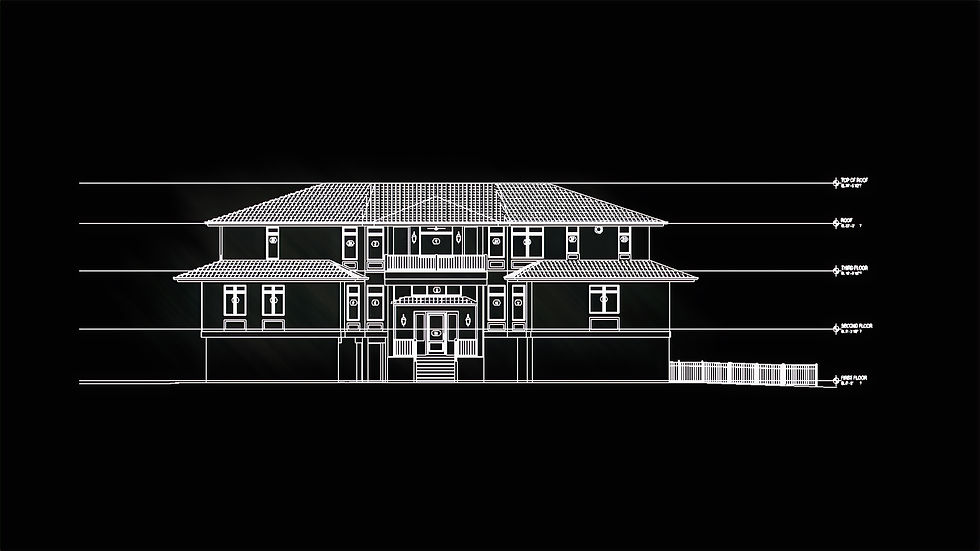
2D AutoCAD Drawings: While 3D is the future, 2D floor plans, elevations, and RCPs (Reflected Ceiling Plans) remain the standard for permit submittals. Our CAD sets were cross-referenced with the 3D model to eliminate any inconsistencies.
Millimeter-Level Interior Capture: Every custom built-in, doorway, and window opening was verified, ensuring that the "as-built" reality matched the "as-designed" intent.

Results: Streamlining the San Diego Design Process
The feedback from the architect was clear: the service was "fast, reliable, and precise." By providing the foundational data early, we eliminated the need for the design team to return to the site for missed measurements, saving the project weeks in the pre-construction phase.
Elevate your design precision. Contact a San Diego As-Built Specialist.


Comments