Residential As-Builts: Why Luxury Home Builds Demand LiDAR


Why Precision Matters More in High-End Residential Projects
Luxury residential construction is not just scaled-up homebuilding. It operates under a different set of expectations. Tolerances are tighter. Finishes are custom. Design intent is deeply tied to detail. In markets like Miami, Los Angeles, and New York, homeowners and architects expect outcomes that match the vision exactly, not approximately.
This is why Residential as-built services have become a critical part of high-end projects. When budgets are high and design complexity is elevated, even small measurement errors can lead to visible flaws, costly rework, and schedule delays. In this environment, traditional documentation methods often fall short.
LiDAR-based as-builts bring the level of accuracy that luxury projects demand.
Why Standard Tape Measures Fail in Modern Luxury Architecture
Luxury homes today rarely follow simple geometry. Curved walls, angled ceilings, floating staircases, and layered architectural features are common. These designs look clean and effortless when finished, but they are unforgiving during construction.
Tape measures and manual field surveys struggle in these environments for several reasons:
Non-linear walls introduce compounding measurement errors
Sloped ceilings make reference points inconsistent
Custom features lack standardized dimensions
Human error increases with complexity
Even an experienced surveyor working carefully can only capture selective points. What gets missed is often what causes problems later.
In contrast, laser scanning captures continuous geometry. Every surface, angle, and transition is recorded in three-dimensional space. For luxury homes, this difference is not academic. It directly affects how well design intent translates into built reality.

The Role of LiDAR in Residential As-Built Services
LiDAR scanning creates a highly accurate digital record of a home as it exists at a specific moment in time. Instead of relying on isolated measurements, the entire space is captured as a complete dataset.
For Residential asbuilt services, this means:
Walls are modeled exactly where they are, not where they were assumed to be
Ceiling profiles reflect real slopes and offsets
Structural elements align correctly with architectural features
This level of accuracy becomes especially important during renovations and additions, where new work must integrate seamlessly with existing conditions.
Supporting Luxury Home Renovation Plans With Accurate Data
Luxury renovations often involve working within tight constraints. Existing structures may remain, while new layouts, systems, and finishes are introduced. In these scenarios, accurate documentation is essential.
Luxury home renovation plans benefit from LiDAR-based as-builts because they allow design teams to:
Test layouts against real dimensions
Coordinate new millwork with existing walls and ceilings
Avoid clashes between structure, lighting, and HVAC
Reduce redesign caused by unexpected conditions
When the base documentation is reliable, design decisions move faster and with greater confidence.
Capturing Custom Millwork Without Compromise
Custom millwork is a defining feature of high-end residential projects. Built-in cabinetry, wall panels, shelving systems, and integrated furniture often need to fit perfectly within irregular spaces.
Small inaccuracies can create big problems:
Gaps that require field fixes
Panels that do not align with ceiling planes
Doors and drawers that bind or misalign
LiDAR scanning captures the exact geometry millwork needs to accommodate. This allows fabricators to work from accurate models instead of idealized drawings.
For high-end residential surveys, this precision reduces shop rework and field adjustments, protecting both quality and schedule.
Intricate Lighting Layouts Demand More Than Approximate Measurements
Luxury homes increasingly rely on layered lighting strategies. Recessed fixtures, linear LEDs, cove lighting, and architectural accents are carefully coordinated with ceilings, millwork, and finishes.
These systems are sensitive to alignment. A few millimeters off can disrupt symmetry or highlight inconsistencies.
LiDAR-based documentation supports lighting design by:
Verifying ceiling depths and offsets
Confirming fixture spacing against actual conditions
Coordinating lighting with structural and mechanical elements
For design teams, this reduces late-stage adjustments and preserves visual intent.

Why High-End Residential Surveys Reduce Construction Risk
Luxury residential projects carry reputational risk as well as financial risk. Delays and visible mistakes are far less tolerated at the high end.
Accurate high-end residential surveys reduce that risk by:
Eliminating assumptions about existing conditions
Reducing the likelihood of change orders
Improving coordination between trades
When contractors and designers are working from the same verified information, execution becomes more predictable.
Featured Project: Precision in Residential Construction
On a recent high-end residential renovation, the design included curved walls, custom ceiling details, and integrated lighting throughout the main living spaces. The existing structure had subtle deviations from the original drawings due to previous modifications.
Before finalizing renovation plans, the project team commissioned LiDAR-based as-builts. The scan revealed:
Wall curvature that differed slightly from the drawings
Ceiling slopes that impacted lighting alignment
Structural offsets that affected millwork depth
By identifying these conditions early, the team adjusted the design before fabrication began. The result was a smoother construction phase, minimal field changes, and finishes that aligned precisely with the original design vision.
This level of control is difficult to achieve without accurate as-built data.
Long-Term Value for Owners of Luxury Homes
The benefits of LiDAR-based as-builts extend beyond construction. Luxury homeowners often invest in long-term property value, future upgrades, and ongoing maintenance.
Accurate Residential as-built services support:
Future renovations or expansions
Faster troubleshooting of systems
Better documentation for property management
Instead of relying on memory or outdated drawings, owners retain a reliable record of their home.
Why This Matters in Markets Like Miami, LA, and NY
High-end residential markets in cities like Miami, Los Angeles, and New York share common traits. Properties are expensive. Design standards are high. Construction environments are complex.
In these markets:
Mistakes are costly
Schedules are compressed
Design expectations are uncompromising
Using LiDAR for as-built documentation aligns with the realities of building at this level. It supports precision where precision is expected.
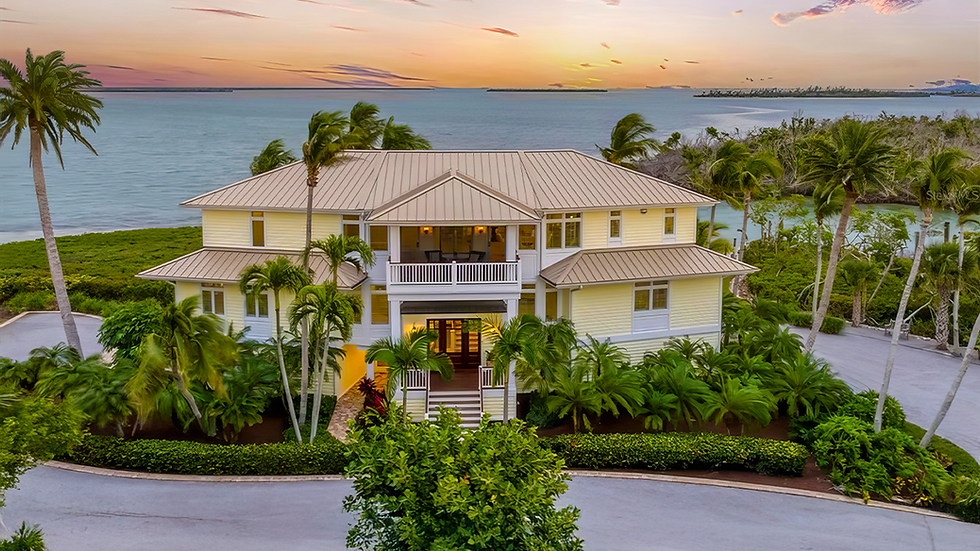
Moving Beyond Approximation in Luxury Residential Design
Luxury homes are defined by detail. Achieving that level of refinement requires more than good craftsmanship. It requires accurate information from the start.
By integrating LiDAR into high-end residential surveys, teams replace approximation with certainty. Custom millwork fits as intended. Lighting aligns cleanly. Renovation plans respect existing conditions.
For luxury residential projects, this is not an upgrade. It is the standard that modern design demands.
When accuracy becomes the foundation, the finished home reflects the vision without compromise.


Comments