How 3D Laser Scanning Prevents Construction Change Orders


Why Change Orders Are Often a Documentation Problem, Not a Construction Problem
Construction change orders are usually treated as an unavoidable part of building projects. Budgets include contingencies, schedules include buffers, and teams prepare for adjustments once work begins. But when you look closely at why most change orders happen, a clear pattern emerges.
They are rarely caused by poor workmanship. More often, they stem from incomplete, outdated, or inaccurate information about existing conditions.
This is where 3D laser scanning services play a critical role. By capturing the reality of a building before construction starts, scanning removes the guesswork that leads to costly changes later. For owners, project managers, and contractors alike, it has become one of the most effective tools for construction risk mitigation.
The Hidden Costs of Relying on Outdated 2D Blueprints
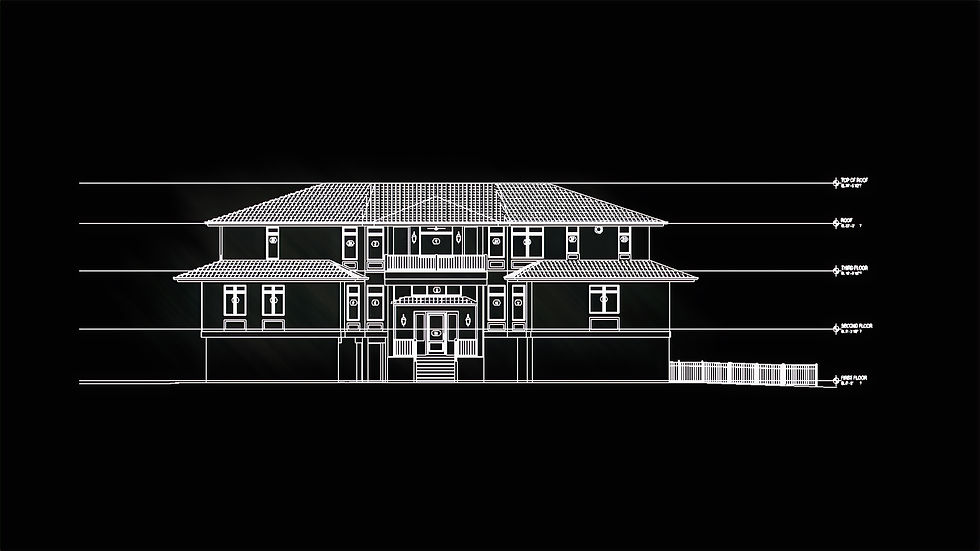
2D blueprints were never designed to represent complex, evolving buildings over time. They show intent at a moment in history, not what exists today. Yet many projects still rely on drawings that are years or even decades old.
Where Outdated Drawings Create Risk
Older 2D drawings often fail because:
Field changes were never documented
Systems were rerouted during previous renovations
Temporary solutions became permanent installations
Dimensions drifted from original design during construction
These gaps usually remain hidden until demolition or installation begins. At that point, the cost of discovery is far higher.
A single missed condition can trigger:
Emergency redesign
Material reordering
Schedule delays
Additional labor and supervision
These costs rarely appear in the original budget, but they show up quickly once work is underway.
Why 2D Drawings Struggle With Modern Building Complexity
Modern buildings are dense. Structural, mechanical, electrical, plumbing, and fire protection systems all compete for limited space. Representing this complexity in flat drawings creates blind spots.
In 2D:
Vertical relationships are difficult to interpret
Small offsets between systems are easy to miss
Conflicts may not appear until construction
This limitation is one of the main reasons change orders spike during coordination-heavy phases of a project.

Real-World Clash Detection: Finding a Pipe Where a Beam Should Be
One of the most common and expensive discoveries during construction is a physical clash between systems. A classic example is finding a pipe routed through the same space where a structural beam is designed to go.
Without accurate existing-condition data, this type of conflict often goes unnoticed until installation. By then, multiple trades are already mobilized, and the fix affects more than one scope.
How 3D Laser Scanning Changes This Outcome
Laser scanning captures all visible elements within a space, including structure and services. When that data is used for coordination, conflicts become visible long before construction.
Instead of discovering the clash in the field, teams see it digitally. That allows them to:
Adjust routing during design
Resolve conflicts without rework
Avoid emergency change orders
The Role of As-Built Precision in Preventing Rework
Accuracy matters. Small errors compound quickly when multiple trades rely on the same information.
As-built precision refers to how closely documentation reflects what actually exists in the field. Laser scanning achieves a level of precision that manual methods cannot consistently match.
With accurate as-built data, teams can:
Verify clearances with confidence
Coordinate installations more tightly
Reduce tolerance stacking issues
Avoid late-stage surprises
This precision directly reduces the likelihood of change orders tied to dimensional conflicts.

How 3D Laser Scanning Services Create a Single Source of Truth
One of the biggest coordination challenges on construction projects is information inconsistency. Different trades often work from different drawings, revisions, or assumptions.
3D scanning addresses this by creating a shared, verified dataset.
What “Single Source of Truth” Actually Means
When scan data is used as the foundation for design and coordination, all stakeholders reference the same conditions. Architects, engineers, contractors, and owners are no longer debating what exists. They are working from a common understanding.
This single source of truth:
Reduces conflicting interpretations
Minimizes RFIs related to existing conditions
Improves trust between project teams
When everyone sees the same data, coordination becomes more efficient and less adversarial.
Reducing Change Orders Across Project Phases
Change orders can occur at any stage, but most trace back to early decisions made with incomplete information.
3D laser scanning reduces risk at each phase:
Pre-design: Accurate documentation informs realistic planning
Design: Clash detection prevents conflicts from reaching the field
Construction: Fewer surprises mean fewer changes
Closeout: Reliable documentation supports future work
By addressing uncertainty early, scanning reduces the ripple effects that cause cost overruns later.
Why Construction Risk Mitigation Starts Before Construction
True construction risk mitigation does not begin on site. It begins during documentation and planning.
Relying on assumptions introduces risk. Verifying conditions reduces it.
Laser scanning supports risk mitigation by:
Eliminating unknowns behind walls and ceilings
Reducing dependency on outdated records
Improving coordination between disciplines
This proactive approach shifts projects from reactive problem-solving to controlled execution.
The Financial Impact of Preventing Change Orders
Every avoided change order saves more than its direct cost. It also preserves schedule, protects relationships, and reduces management overhead.
For owners, fewer change orders mean:
More predictable budgets
Lower contingency usage
Better confidence in project outcomes
For contractors, it means fewer disruptions and clearer scopes.
These benefits compound across portfolios and repeat projects.

Why Teams Are Moving Away From Guesswork
As projects become more complex and margins tighter, tolerance for uncertainty continues to shrink. Teams are no longer willing to accept change orders as inevitable when tools exist to prevent them.
3D laser scanning services provide clarity at a level that traditional methods cannot match. By improving as-built precision and supporting construction risk mitigation, scanning has become a practical necessity rather than a technical luxury.
Making Accurate Data the Foundation of Your Project
Preventing change orders is not about reacting faster. It is about planning smarter.
When teams start with accurate, comprehensive data, decisions improve across the board. Design becomes more reliable. Coordination becomes more efficient. Construction becomes more predictable.
In that context, 3D laser scanning is not an added cost. It is an investment in certainty.
By replacing outdated 2D blueprints with verified existing-condition data, projects gain the clarity needed to avoid costly surprises. And in an industry where one unexpected clash can trigger weeks of disruption, that clarity makes all the difference.


Comments